Design + Install
The backyard slope was a real problem. It ran at about a 40% grade — steep enough that the clients couldn't use the space at all, and every winter the soil slid toward the lower neighbor's fence. When we first walked the site, there was clear erosion scarring and a few sections of dead grass that were barely holding anything together.
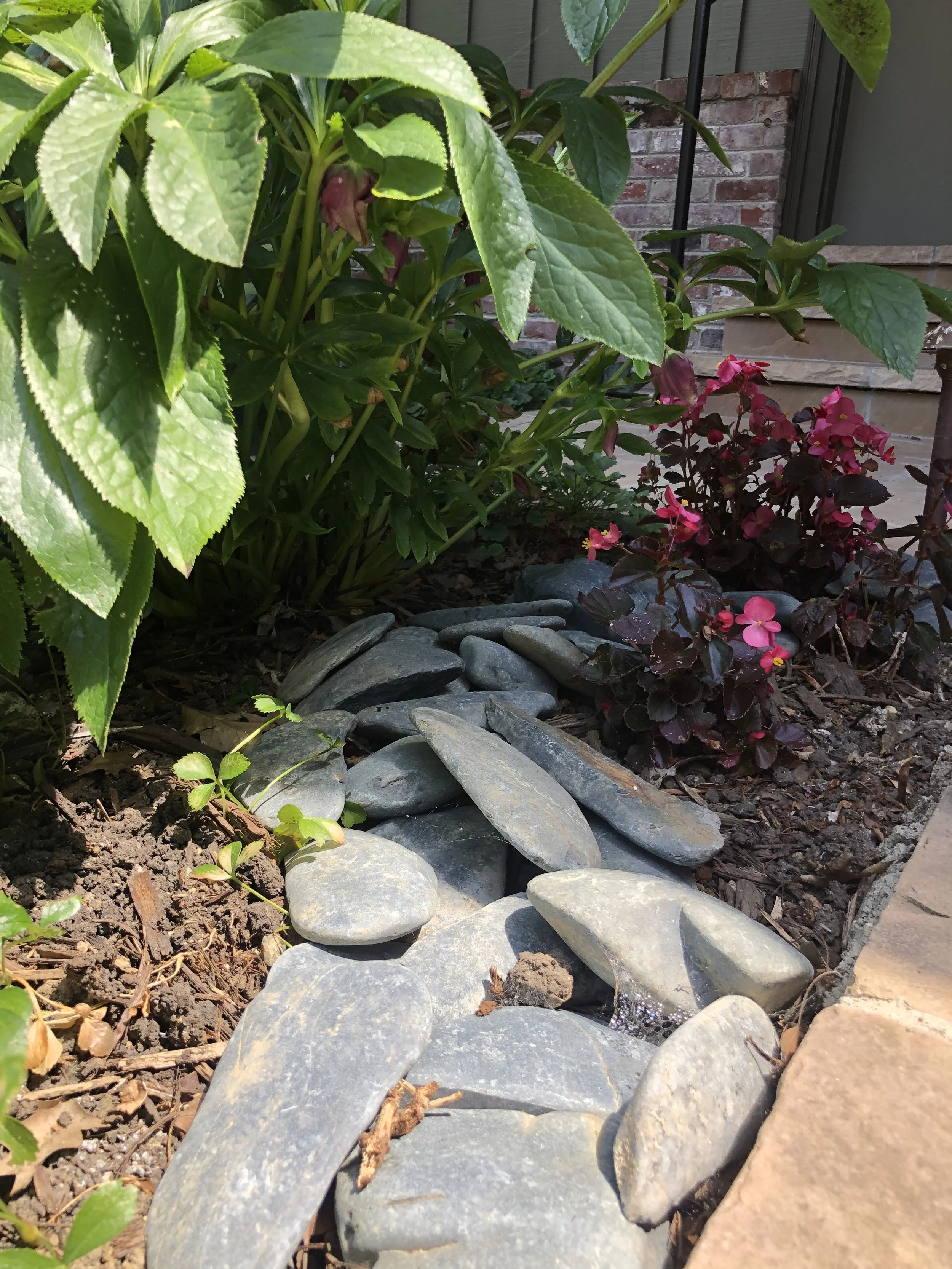
The design solution was three stepped terraces with dry-stacked stone retaining walls. We used reclaimed basalt from a local salvage yard to keep things looking grounded and regional rather than imported. Between the walls, we cut in level planting beds — wide enough to actually sit in front of someday, not just wide enough to plant in.
Plant selection for a terraced hillside has to prioritize deep root structure and the ability to tolerate both the dry summers and the wet winters common in the East Bay hills. We used ceanothus, coffeeberry (Frangula californica), and perennial salvias throughout — all native, all low water once established, all with strong enough root systems to hold the terraces in a wet year.
The install itself took four days of heavy work. We hauled stone by hand up the slope since equipment access was limited. Cass ran the crew on site and managed the drainage details that made the whole thing structurally sound. It's now one of the projects we point to when people ask what a difficult site can become.
Project details
Site challenge
40% grade slope, active erosion
Structure
3 dry-stacked basalt retaining walls
Plants used
Ceanothus, coffeeberry, Salvia clevelandii
Materials
Reclaimed basalt, decomposed granite
Timeline
3 weeks design, 4-day install
Steep slopes, bad drainage, tricky soil — we've dealt with it. Tell us what you're working with.
Get a quote